
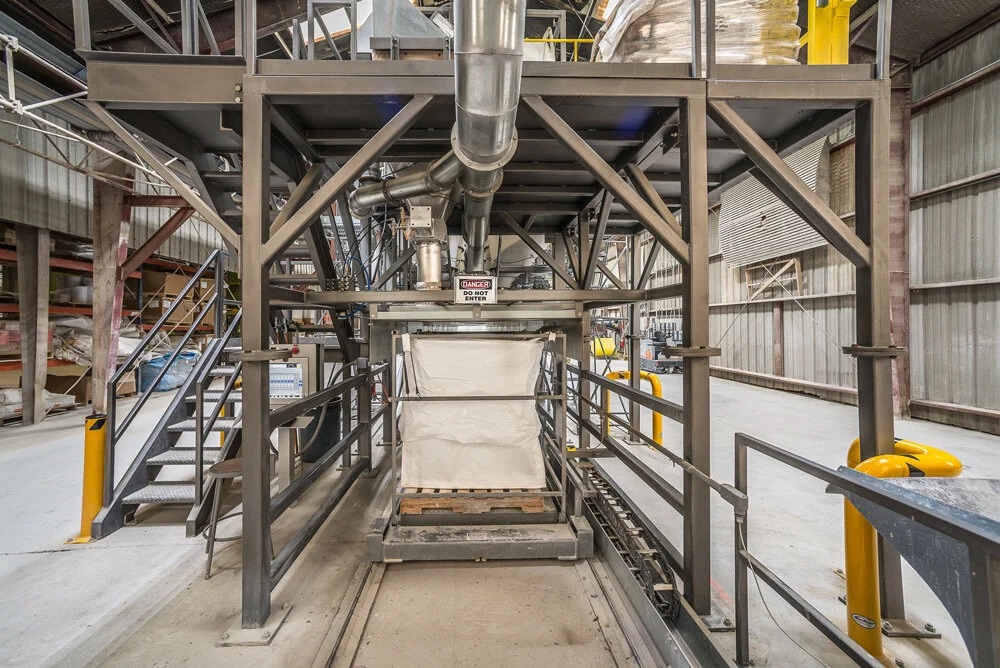
Feeding and Conveying
Need Ideas for Feeding or Conveying Your Dry Bulk Solids?
Powder handling equipment is our specialty. Our engineers have worked with thousands of dry bulk materials — let us help solve your material handling problem.
What it is: Feeding and conveying equipment is the process interface hardware — feeders, conveyors, slide gates, diverters, and related components — that moves and meters dry bulk material within a weighing or batching system.
Ingredient Masters is a designer and fabricator of batching equipment for dry bulk solids, and feeding and conveying equipment is where that expertise gets applied at the material level: matching the right feeder, valve, conveyor, or transport method to how a specific material actually behaves, not just what a spec sheet says it should do. Whether you’re metering free-flowing powder, moving material dust-free through a pneumatic line, sealing pressure zones with a rotary airlock, or routing multiple ingredients through a shared weighbelt line, the right equipment here is often the difference between a batching system that hits tolerance consistently and one that doesn’t.
Benefits of Our Feeders and Conveyors
Feeders and Conveyors FAQs
It’s the process interface hardware — feeders, conveyors, slide gates, diverters, and valves — that moves dry bulk material from storage or a dispenser into a batching or weighing process, controlling how much material moves and how precisely.
A screw feeder uses a rotating auger to meter material, similar to a screw conveyor, and works well for both free-flowing and non-free-flowing solids. A vibratory feeder uses a magnetic drive to vibrate material along a path, handling a wider range of particle sizes, from micron-scale powders to bulky chunks.
It depends on the material’s flow characteristics, your environment, and your system’s accuracy and speed requirements. Ingredient Masters’ engineers evaluate all three together, since the same feeder can perform very differently across materials with different flow properties.
Yes. Feeding and conveying equipment is typically specified and integrated as part of a larger batching or weighing system, whether that system is one Ingredient Masters designed or an existing one you’re upgrading.
Screw feeders handle both free-flowing and non-free-flowing dry solids. Vibratory feeders can handle a very wide range, from micron-size powders to bulky chunks, due to their enclosed magnetic drive design.
Pneumatic conveying moves dry bulk material through enclosed lines using air, keeping the transfer process dust-free. It’s commonly used to move material between storage, dispensers, and downstream batching or packaging equipment without generating fugitive dust.
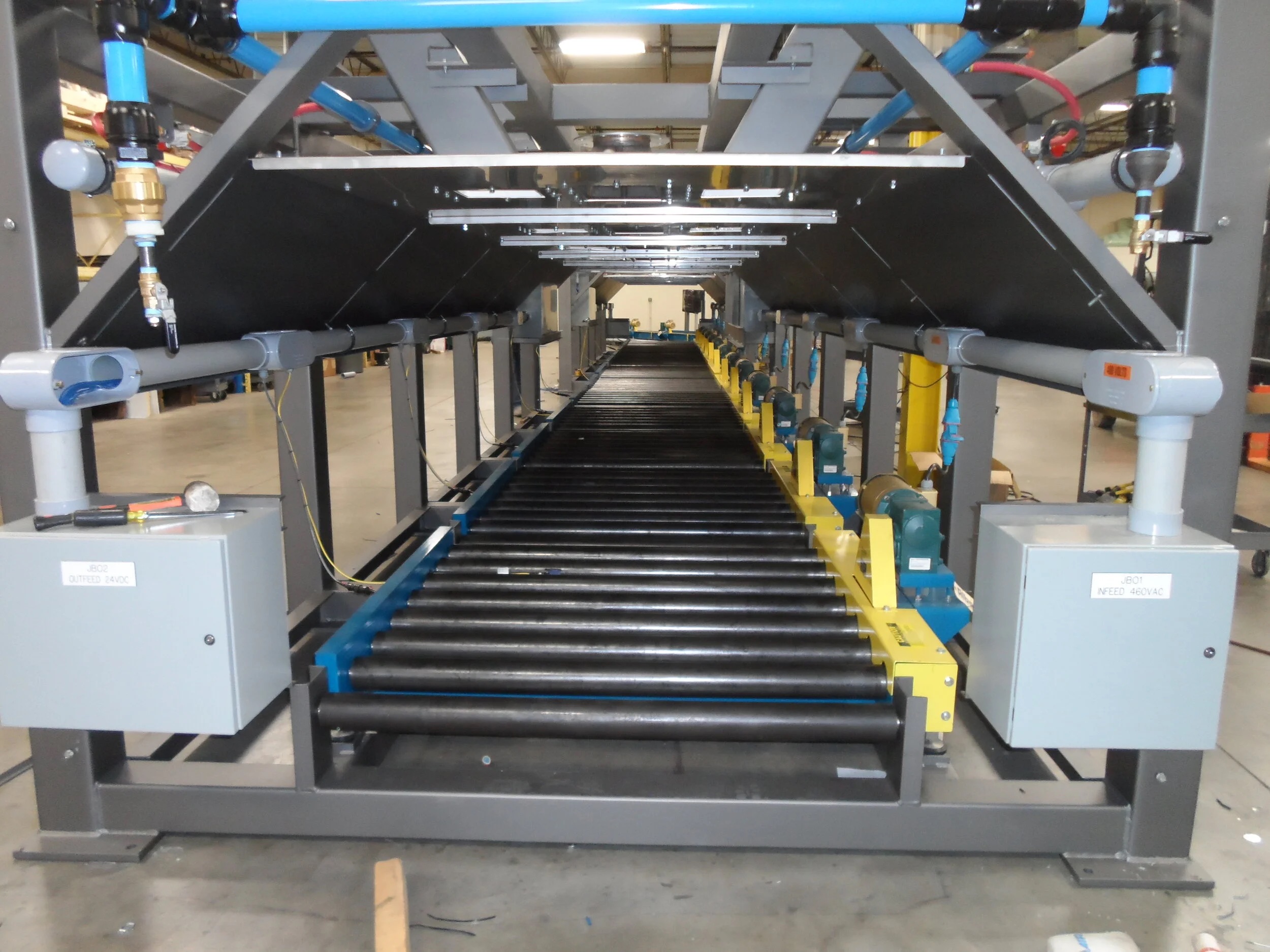
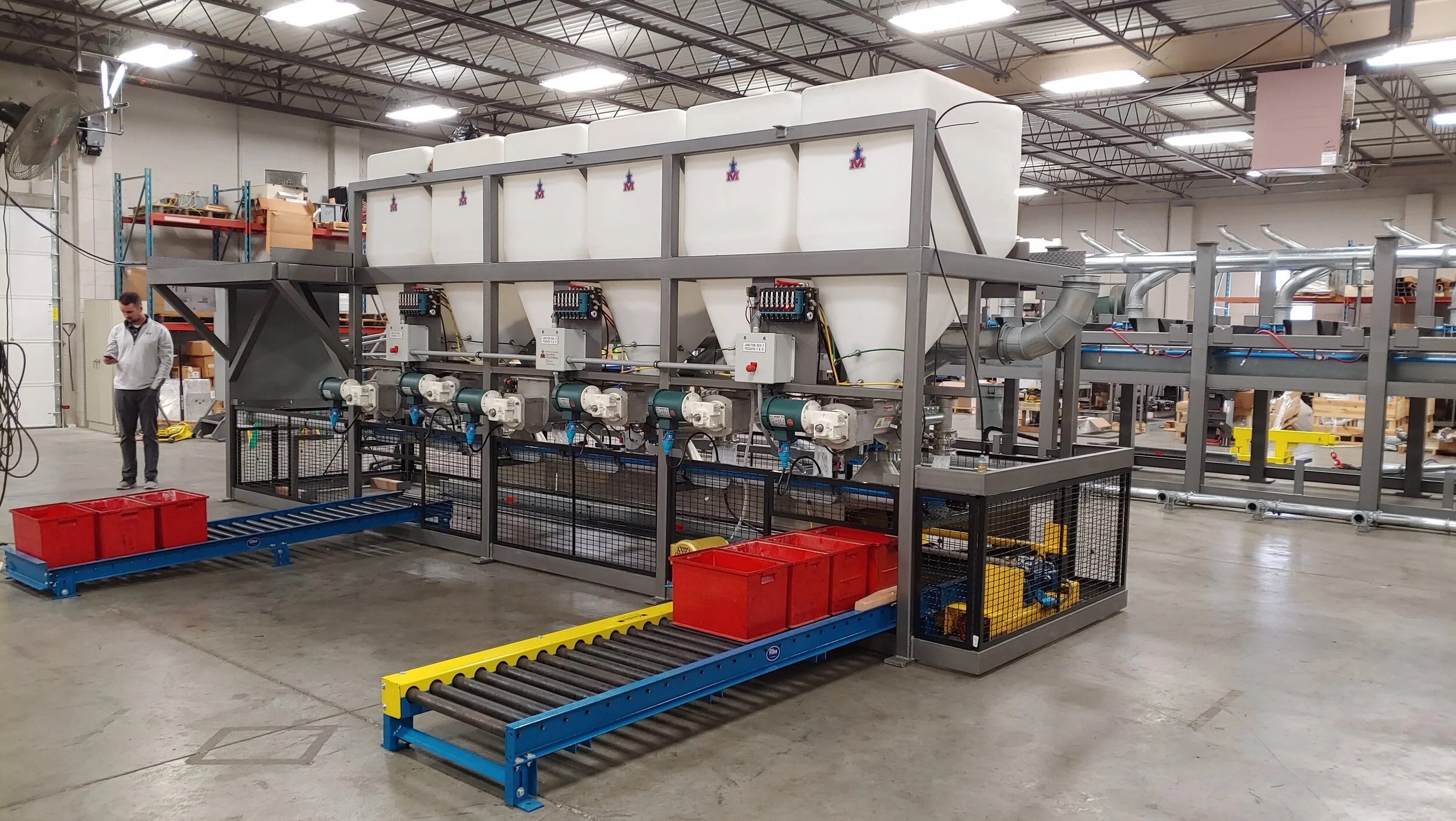
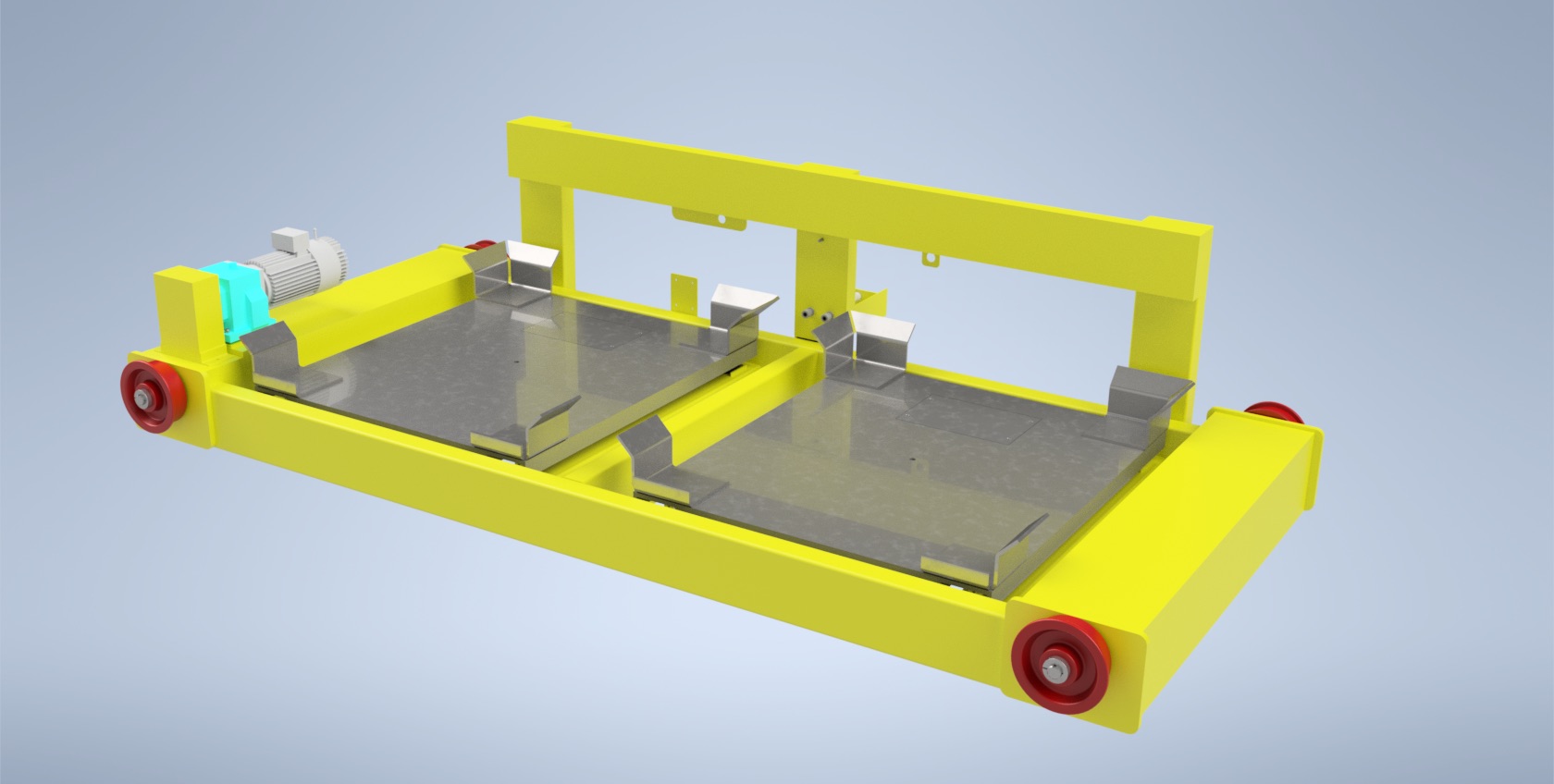
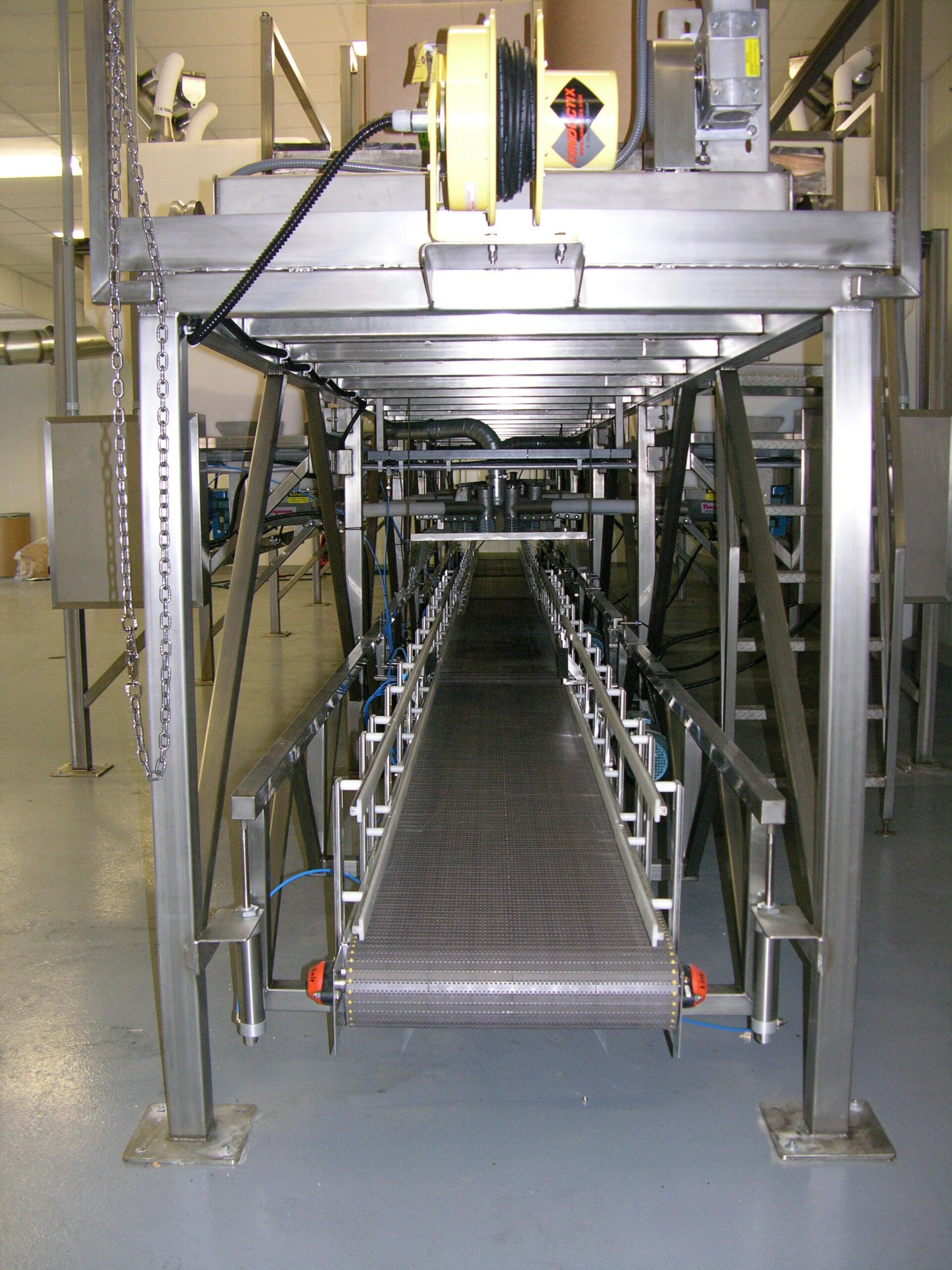
A weighbelt conveyor moves batch containers along a line of weigh stations, collecting metered material from the dispensers or feeders positioned at each stop. It’s typically built directly into the batching line, making it well suited to multi-ingredient systems where several dispensing zones feed one moving batch.
A rotary airlock meters material while sealing between two zones of different pressure, commonly feeding material into or out of a pneumatic conveying line without breaking containment. Its rotating vaned rotor moves material through in metered pockets for consistent, gentle feeding.